Ecommerce Website Cost in India (2026): WooCommerce vs Shopify
Ecommerce quotes can look similar while covering very different store builds. A small catalogue, a large product range, a managed platform, a custom checkout flow, and an integration-heavy store each need different planning.
Relevant next step
Want this applied to your business website?
Read the guide, then use the closest service page or send your details for a practical website direction.
Store budget decision
What determines ecommerce website cost in India?
Product count alone does not determine cost. Platform choice, catalogue complexity, payments, shipping rules, integrations, checkout quality, analytics, and ongoing management create the real scope.
Free website check
Curious if your website passes the basics?
Run a free instant check for SEO basics, CTA clarity, mobile viewport, WhatsApp path, schema, and internal links.
Signs your website is not converting
Visitors don’t take action
People read but don’t call, message, or book anything.
No clear next step
Visitors are confused about what to do after reading your site.
Too much text, low clarity
Your message is not clear in the first few seconds.
Weak trust signals
No proof, testimonials, or credibility to build confidence.
Why a website matters for local businesses
Ecommerce quotes can look similar while covering very different store builds. A small catalogue, a large product range, a managed platform, a custom checkout flow, and an integration-heavy store each need different planning.
A home baker's small catalogue and a large clothing brand may both need an online store, but the product data, checkout, fulfilment, account ownership, and post-launch work are not the same. Understand the wider website cost framework before committing to a platform.
What changes ecommerce website cost
The quote should follow the store scope, not only the number of pages.
| Store situation | Main scope drivers to price | Confirm before approving |
|---|---|---|
| Small catalogue or first store | Product count, variants, product data, payment route, order notifications | Who supplies and uploads product content, and what the first launch includes |
| Growing retail store | Filters, collection structure, shipping rules, returns information, editing workflow | Catalogue ownership, operational tools, and responsibility for ongoing updates |
| Brand with custom requirements | Custom design, integrations, data model, customer accounts, bespoke checkout or workflows | Technical discovery, third-party account owner, testing, handover, and future changes |
| Marketplace or complex platform | Seller workflows, moderation, payments, security, data, operations, and support | Whether the project is a website build or a separately scoped software product |
Request a written scope and price only after these requirements are clear.
Contextual Next Step
Reading about Ecommerce Website Cost In India?
The next useful step is to review the right service or review page.
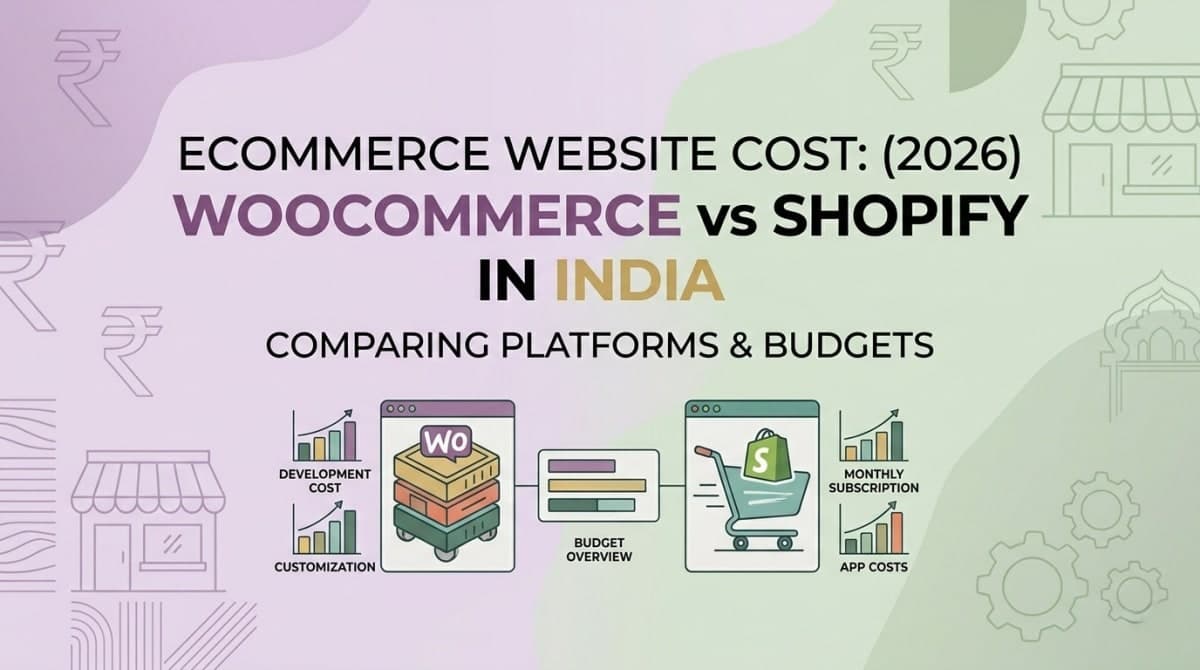
Platform Comparison: WooCommerce vs Shopify vs Custom for Indian...
WooCommerce (WordPress plugin): Can suit businesses that want a WordPress editing workflow and are prepared to own hosting, plugin, update, backup, and compatibility decisions.
Shopify: Can suit businesses that prefer a managed platform and accept its plan, app, provider, and account terms. Confirm current plan and transaction terms directly with the provider before choosing it.
Custom store: Can suit a project that genuinely needs custom catalogue, checkout, integration, design, or workflow control beyond the chosen platform. It needs clear technical discovery, deployment ownership, and a future-change process.
Platform alone does not guarantee speed, rankings, sales, lower lifetime cost, or an easier operating model. Choose according to the business's editing needs, operational workflow, third-party accounts, and agreed scope.
Before vs after the right website structure
Before
- Unclear homepage message
- No visible doctor or business trust
- No appointment or WhatsApp path
- Visitors leave without contacting
After
- Clear service and specialisation
- Trust section visible in seconds
- WhatsApp or call button on every page
- More enquiries from the same traffic
Don’t guess what your website needs
Understand what your website actually needs before you spend more money.
Direct team. Clear next step.
Website pricing bands to compare before hiring
Starter enquiry website
INR 18,900 - INR 30,000
- 5-7 pages website
- Mobile responsive
- Basic SEO setup
Growth website
INR 30,000 - INR 56,000
- 8-12 pages website
- WhatsApp integration
- Advanced SEO setup
Advanced website system
INR 56,000 - INR 2,00,000+
- Custom design & features
- Booking / enquiry system
- Ongoing support
Compare First-Year Ecommerce Ownership, Not Just the Build Quote
A build quote is only one part of the first year. Before choosing a platform, ask for the costs below to be listed separately. That makes two quotes comparable even when their initial prices differ.
| First-year cost area | What to clarify before approving a quote |
|---|---|
| Store build | Product-page count, catalogue structure, checkout scope, and what is excluded |
| Platform or hosting | The subscription, hosting plan, domain, and renewal responsibility |
| Apps, plugins, and licences | Which paid tools are required at launch, their renewal cycle, and who owns the accounts |
| Payments and shipping | Gateway, shipping-provider, tax, and order-notification setup included in the project |
| Product launch work | Who supplies photos, descriptions, prices, variants, and inventory data—and who uploads them |
| Post-launch ownership | The handover, update process, support scope, and the cost of future changes |
Use the answers as a decision sequence:
1. Choose Shopify when a managed platform and its ongoing subscription/app model fit the business.
2. Choose WooCommerce when the business is prepared to own its hosting, plugin, and maintenance decisions.
3. Choose a custom store when the required catalogue, checkout, or integration workflow cannot be clearly delivered through the selected platform.
The right choice is the one whose build scope and first-year responsibilities are clear before product work begins—not simply the lowest opening quote.
Ecommerce website scope and package comparison
Most ecommerce quotes become confusing because setup, product upload, payment gateway, shipping, GST, support, and conversion work are mixed together.
| Package type | Usually includes | Clarify before comparing quotes |
|---|---|---|
| Basic store setup | Theme setup, basic catalog, cart, payment route | Product count, variants, data upload, and launch checks |
| Growth ecommerce website | Product pages, trust sections, filters, contact/WhatsApp, tracking | Which product, content, marketing, and reporting tasks are included |
| Custom ecommerce system | Custom frontend, advanced catalog, dashboards, integrations | Data, account ownership, operational process, security, and support scope |
| Shopify customization | Theme, apps, payment and shipping configuration when agreed | Current provider plan, app terms, account owner, and work outside the build |
Do not compare ecommerce packages only by page count. Compare checkout quality, product clarity, mobile speed, tracking, and how easy it is to manage orders after launch.
Essential ecommerce features to scope before pricing
| Feature area | Confirm before asking for a quote |
|---|---|
| Product catalogue | Product count, variants, images, descriptions, price wording, inventory source, and upload owner |
| Cart and checkout | Required customer details, payment route, coupon/discount rules, and order confirmation flow |
| Shipping and delivery | Shipping provider, serviceable locations, charges, returns process, account owner, and data needed for setup |
| Tax and invoicing | The client's approved business, tax, invoice, and accounting requirements; obtain qualified advice where needed |
| Customer accounts and order status | Whether the selected platform already covers the need or custom work is required |
| Search, filters, languages, and notifications | Required product attributes, content owner, external provider terms, and post-launch maintenance owner |
Build the feature list before getting a quote. Developers price differently because the scope and responsibility differ.
First-year ecommerce ownership costs to confirm
Beyond the build, list the ongoing and third-party responsibilities before launch:
Platform, hosting, domain, and email: Confirm current provider terms, renewal dates, account owner, and who has access.
Payments and shipping: Confirm provider fees, activation requirements, settlement, returns, and account ownership directly with each provider. These services remain the client's accounts and business operations.
Apps, plugins, licences, and integrations: List every required tool, its renewal model, its data access, and who approves or pays for it.
Product data and media: Confirm who supplies approved photos, descriptions, prices, stock, legal wording, shipping/return information, and updates after launch.
Post-launch changes: Separate agreed support from new pages, features, design work, operational tasks, or third-party configuration changes.
A practical first ecommerce launch scope
If you're starting online, agree a small launch scope before adding advanced features:
1. Clean product pages with good photos and clear descriptions
2. A checkout and payment route that the business has approved and can operate
3. A clearly documented order, shipping, return, and customer-support process
4. Order confirmation via email + WhatsApp
5. A usable mobile journey from product discovery to the agreed next step
6. Any invoicing or compliance requirement reviewed by the business and its qualified adviser
The required build, third-party accounts, and operating responsibilities should be written down before launch.

Written by DhirajWeb Agency
Founder-led website and enquiry system guidance
DhirajWeb Agency builds fast, mobile-first websites, landing pages, and WhatsApp enquiry flows for clinics, coaching institutes, local service businesses, and growth-focused brands in India.
Recommended guides
FAQs About Ecommerce Website Cost In India
Can I start with a simple website and add ecommerce functionality later in India?
Yes. The effort depends on the existing platform, data, checkout, payments, shipping, account ownership, and whether the current site can support the required workflow. Ask for a separate discovery and written scope instead of assuming a fixed percentage of a new build.
Is Shopify worth it for an Indian small business in 2026?
It can be a fit when the business wants a managed platform and accepts the relevant plan, app, account, and provider terms. Compare its editing workflow and recurring responsibilities with WooCommerce or a custom build using your actual catalogue, operations, and budget; confirm current provider pricing directly before deciding.
Do I need to register my business before selling online in India?
Business registration, tax, invoicing, payment, consumer, and marketplace requirements depend on the business and can change. Confirm them with an appropriate qualified adviser and the relevant platform or provider before launch; website development does not replace legal, tax, or compliance advice.
How long does it take to build an ecommerce website in India?
The timeline depends on product data, approved content, catalogue complexity, platform choice, integrations, account setup, review cycles, testing, and launch readiness. Agree milestones after discovery rather than relying on a universal timeline.
Which payment gateway is best for Indian ecommerce websites?
The right payment provider depends on the business's eligibility, product category, settlement needs, customer payment methods, provider terms, and operating process. Review current terms directly with eligible providers and keep the business account owned by the client.
Dhiraj Kumar
Founder, DhirajWeb Agency
I help local businesses build conversion-focused websites with clearer trust, structure, and enquiry flow.
View all guidesNext step
Audit your own website before you hire anyone
Get a fast baseline report first. If the result looks weak, you can request a manual deep review after the instant audit.
Ready to turn your website into a lead system?
I'll help you choose the right next step before you spend more.