Mobile-First Websites in India: Why It Matters for Your Business
A mobile visitor should be able to understand the page, find the right action, and complete it without unnecessary friction. That matters whether they arrived through search, a referral, a profile, or a campaign.
Relevant next step
Want this applied to your business website?
Read the guide, then use the closest service page or send your details for a practical website direction.
Free website check
Curious if your website passes the basics?
Run a free instant check for SEO basics, CTA clarity, mobile viewport, WhatsApp path, schema, and internal links.
Signs your website is not converting
Visitors don’t take action
People read but don’t call, message, or book anything.
No clear next step
Visitors are confused about what to do after reading your site.
Too much text, low clarity
Your message is not clear in the first few seconds.
Weak trust signals
No proof, testimonials, or credibility to build confidence.
Why a website matters for local businesses
A mobile visitor should be able to understand the page, find the right action, and complete it without unnecessary friction. That matters whether they arrived through search, a referral, a profile, or a campaign.
Mobile-first is a design and testing approach—not a promise of rankings, enquiries, or sales. Before planning a rebuild, compare the page scope and technical responsibilities in the website development cost guide and review the current mobile journey.
Why the Mobile Journey Needs Its Own Review
A desktop preview cannot show every problem a visitor may have on a smaller screen or a real connection. Navigation, text length, page hierarchy, forms, third-party widgets, images, tap targets, and loading behaviour can all change the mobile experience.
For a local business, review the journeys that matter: finding a service, checking location or hours, calling, starting a WhatsApp conversation, submitting a form, booking, or buying. Test the actual pages and actions your customers use instead of assuming a desktop layout will translate cleanly.
Contextual Next Step
Reading about Mobile Friendly Website In India?
The next useful step is to review the right service or review page.
What Mobile-First Actually Means (Not Just Having a Mobile Version)
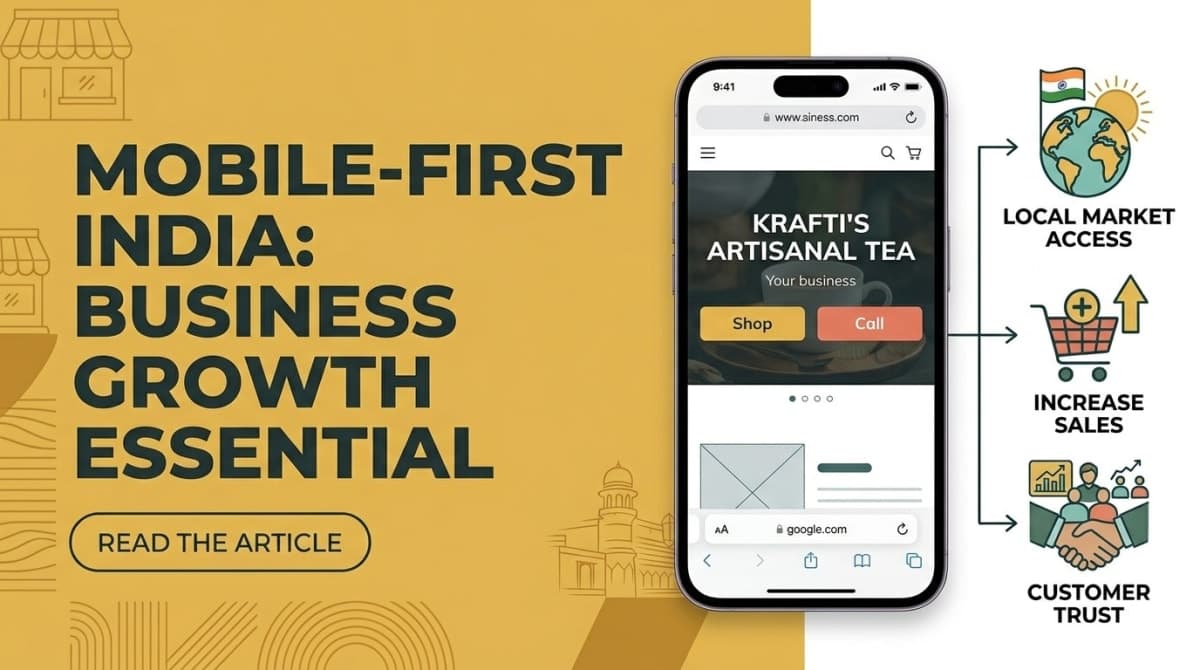
"Mobile-first" does not only mean that a website has a mobile version. It means the small-screen layout, content priority, and key actions are considered early, then adapted for larger screens.
The practical difference:
Desktop-first without a mobile review: A full desktop layout is adapted later, which can leave small text, cramped buttons, horizontal scrolling, or poorly resized images.
Mobile-first: The developer checks readable text, sensible content order, usable controls, responsive images, and the essential actions at small widths before extending the layout to tablet and desktop.
The build should document which pages, devices, browsers, and contact or transaction paths are reviewed before launch.
Before vs after the right website structure
Before
- Unclear homepage message
- No visible doctor or business trust
- No appointment or WhatsApp path
- Visitors leave without contacting
After
- Clear service and specialisation
- Trust section visible in seconds
- WhatsApp or call button on every page
- More enquiries from the same traffic
Don’t guess what your website needs
Understand what your website actually needs before you spend more money.
Direct team. Clear next step.
Website pricing bands to compare before hiring
Starter enquiry website
INR 18,900 - INR 30,000
- 5-7 pages website
- Mobile responsive
- Basic SEO setup
Growth website
INR 30,000 - INR 56,000
- 8-12 pages website
- WhatsApp integration
- Advanced SEO setup
Advanced website system
INR 56,000 - INR 2,00,000+
- Custom design & features
- Booking / enquiry system
- Ongoing support
Keep Mobile Content and Technical Setup Consistent
Google predominantly uses the mobile version of a page for crawling and indexing. That makes it important to keep the meaningful content, structured data, metadata, canonical handling, and important links available and consistent across responsive layouts.
Do not hide essential service information or break the main enquiry path on a small screen simply to make a page look shorter. Mobile usability is one part of a wider technical and content review; it does not guarantee any ranking position.
How to Test Your Website's Mobile Experience Right Now for Free
Real-device review: Open the important pages on a phone using a typical connection. Check whether text is readable, navigation is usable, contact actions work, forms can be completed, and no horizontal scrolling or layout shifts block the task.
Browser testing: Use responsive device emulation in browser developer tools to check several widths, then confirm on real devices where possible.
PageSpeed Insights: Visit pagespeed.web.dev to review field data when available and lab diagnostics. Treat the results as clues for investigating images, scripts, fonts, layout, or server behaviour—not as a standalone score or outcome guarantee.
Common Mobile Issues to Check Before Launch
1. Text too small to read: Check that body text, labels, and error messages remain readable at the actual device width without requiring a visitor to zoom.
2. Controls too small or close together: Make calls, WhatsApp buttons, forms, menus, and other important controls comfortably usable with touch.
3. Images not resizing: Avoid fixed-width assets that overflow the viewport or push the layout sideways.
4. Phone number not clickable: Your phone number should be a tel: link so users can call with one tap. Displaying a number as plain text forces manual dialing.
5. Slow or unstable loading: Review real page assets, scripts, fonts, third-party widgets, and server behaviour on the connections your visitors are likely to use. Prioritise fixes based on the observed diagnostic and the affected customer journey.

Written by DhirajWeb Agency
Founder-led website and enquiry system guidance
DhirajWeb Agency builds fast, mobile-first websites, landing pages, and WhatsApp enquiry flows for clinics, coaching institutes, local service businesses, and growth-focused brands in India.
Recommended guides
- why website loading speed impacts conversions and rankings for Indian businesses
- compare WordPress and custom websites for mobile speed and performance
- hire a web developer who builds genuinely mobile-first websites in India
- get your business website estimate today
- does a small business need a website in India
FAQs About Mobile Friendly Website In India
My website has a separate mobile version - is that good enough for Indian users?
A responsive site with one consistent URL is often simpler to maintain, but the right setup depends on the existing site and technical constraints. If a separate mobile experience already exists, review its content parity, redirects, canonicals, structured data, and maintenance process before changing it.
Does my Indian business website need to look the same on mobile and desktop?
No - and it shouldn't. Mobile layouts prioritize different things: larger text, stacked columns instead of side-by-side, prominent call buttons, and simplified navigation. A good mobile-first design feels native to the phone, not like a shrunken desktop website.
My customers are mostly older and use desktop - does mobile still matter for my Indian website?
Yes. Review the devices and journeys your own customers use, while keeping the mobile version complete and usable for visitors and search crawling. Mobile usability is important, but it is not a standalone ranking guarantee or diagnosis.
How do I know if my Indian business website is truly mobile-first?
Test the important pages and actions on real phones, at several screen widths where possible. Look for readable text, usable navigation, working call/WhatsApp/form actions, stable layout, and an enquiry or transaction journey that the business can complete and verify.
Does a mobile-first website cost more to build in India?
The cost depends on the approved pages, responsive layouts, content, testing expectations, integrations, and review process. Put the devices, browsers, key actions, and mobile acceptance checks into the written scope rather than assuming they are included.
Dhiraj Kumar
Founder, DhirajWeb Agency
I help local businesses build conversion-focused websites with clearer trust, structure, and enquiry flow.
View all guidesNext step
Audit your own website before you hire anyone
Get a fast baseline report first. If the result looks weak, you can request a manual deep review after the instant audit.
Ready to turn your website into a lead system?
I'll help you choose the right next step before you spend more.