Project status
Live
The completed Ajeya Global Academy website is publicly available.
Loading page…
Professional Education Case Study
DhirajWeb delivered the complete digital execution for Ajeya Global Academy: brand positioning, UX and UI, responsive Next.js development, technical SEO, content architecture, conversion optimisation, Google Business Profile optimisation, and Vercel deployment for a US CMA education platform.
Project status
Live
The completed Ajeya Global Academy website is publicly available.
Core platform
Next.js
Built with Next.js, TypeScript, React, Tailwind CSS, and deployed on Vercel.
Admissions journey
Assessment-led
Programme information, decision support, and a multi-step enquiry flow guide the first admissions action.
SEO foundation
Implemented
Technical SEO, on-page SEO, structured data, internal linking, and content architecture were included in the delivery.
This case study documents the verified delivery scope. Performance metrics will be added after sufficient post-launch data has been collected.
Lighthouse lab audit
Lab-test results for the live homepage. Real-user field data was not available in this audit. Audited 26 July 2026.
US CMA candidates need clear programme, eligibility, preparation, and career-direction information before they are ready to begin an admissions conversation.
The digital experience needed to present professional education as a considered decision journey rather than a generic course catalogue.
The platform needed a search-ready content structure connecting programme, eligibility, placement, FAQ, finance-resource, and contact journeys.
An assessment-led first action is more relevant than a generic contact request when a candidate's background, graduation year, and current status affect the next conversation.
Programme detail, learner journey, comparison content, and FAQs should appear before the enquiry flow so visitors can make a better-informed decision.
Commercial programme pages and finance-resource content need internal connections so the website can support both admissions decisions and future educational publishing.
Created the brand positioning, website strategy, information architecture, UX plan, and UI design for an assessment-led US CMA admissions experience.
Built a responsive website with a homepage, US CMA landing page, About, Contact, Placement, finance resources, blog architecture, FAQs, and comparison sections.
Implemented a multi-step enquiry flow with student-background, graduation-year, and current-status inputs, plus direct call and WhatsApp contact paths.
Implemented technical and on-page SEO including metadata, canonical URLs, Open Graph, Twitter Cards, XML sitemap, robots.txt, breadcrumbs, JSON-LD, FAQ Schema, Organization Schema, semantic headings, and internal linking.
Optimised and deployed the Next.js, TypeScript, React, and Tailwind CSS implementation on Vercel, including responsive images, image optimisation, lazy loading where appropriate, and clean semantic HTML.
Ajeya Global Academy is live at ajeyaglobal.com with the public programme, resource, FAQ, and assessment experience.
DhirajWeb project-owner confirmation covers the complete strategy, design, development, SEO, conversion, Google Business Profile, performance, and deployment scope.
A 26 July 2026 PageSpeed Insights audit of the live homepage recorded the scores shown in the performance validation section. Field data was not available.
The live experience includes assessment CTAs, programme information, decision-support content, a multi-step enquiry flow, and call and WhatsApp paths.
Professional education websites should turn eligibility, preparation, and career questions into a guided decision path before asking for an enquiry.
Assessment-led CTAs help align the first website action with the information an admissions conversation needs.
Comparison content, learner journeys, and FAQs can make a high-consideration programme easier to evaluate without relying on generic promotional copy.
A connected architecture of programme, placement, resource, FAQ, and contact content creates a stronger foundation for future education publishing.
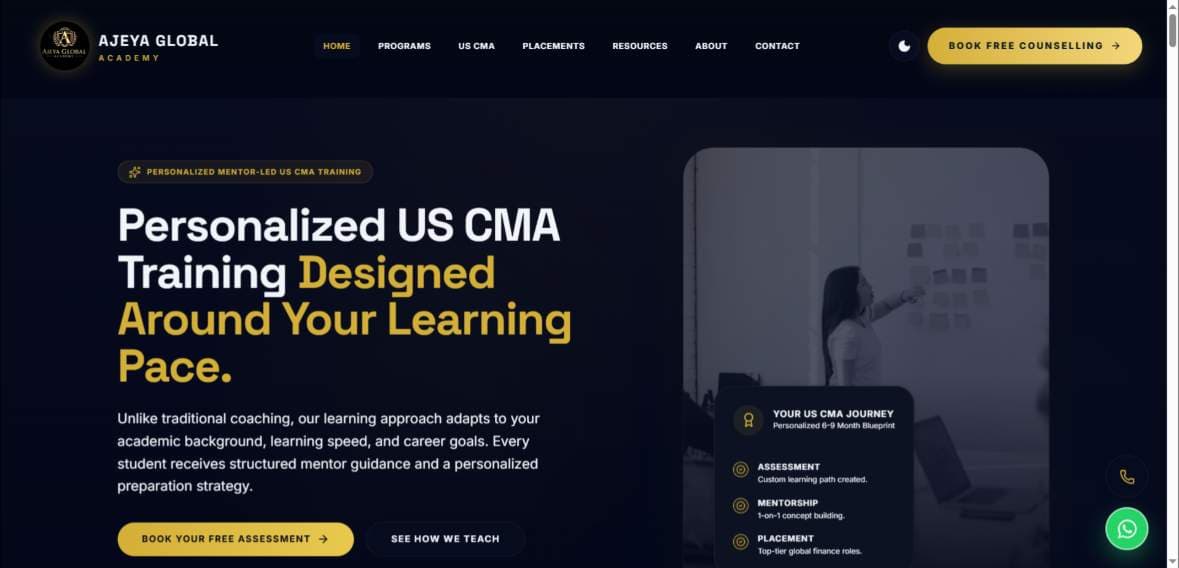
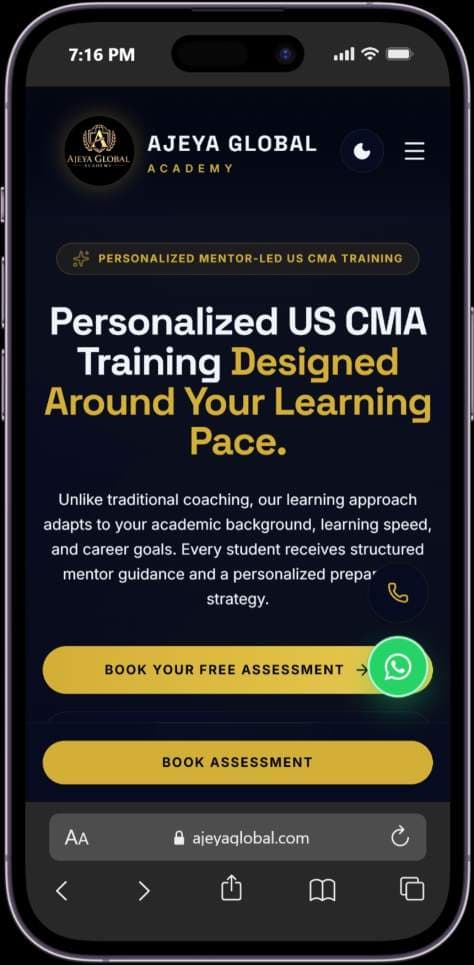
Responsive experience
Design evolution
01
Mapped the US CMA decision journey, audience questions, programme context, and the assessment-led conversion objective.
02
Planned connected programme, eligibility, placement, resource, FAQ, and contact paths rather than isolated pages.
03
Created the visual direction and responsive Next.js experience for desktop clarity and mobile admissions action.
04
Implemented the technical SEO, on-page structure, internal linking, Google Business Profile optimisation, and Vercel deployment foundation.
Design decisions
US CMA candidates need a relevant next step. The primary CTA is framed around an assessment and curriculum evaluation instead of a generic contact request.
The journey explains the learning model, programme context, eligibility, and support before asking visitors to share their details.
A comparison section turns the academy's stated preparation approach into scannable criteria for prospective students evaluating coaching options.
The responsive experience keeps the programme message and assessment action clear for visitors arriving from mobile search, social, or direct contact paths.
If your education business needs a stronger programme structure, technical SEO, and enquiry flow, start with a website review.